By G. W. Thomas
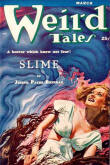 If you watch horror or science fiction movies of any decade after the 1950s, you will see slime monsters: viscous jelly creatures that pour onto the screen like runny, green jello. These creatures all began with H. P. Lovecraft (though you never see anyone ever acknowledge this debt). Tales of slimy monsters were largely unknown before HPL began publishing in the 1920s. I can think of a couple of Pulpers, such as Thorp McKlusky’s “The Crawling Horror” (Weird Tales, November 1936) and “Slime” (Weird Tales, March 1953) by Joseph Payne Brennan, but these came after HPL.
Lovecraft began it with “The Colour Out of Space” (Amazing Stories, March 1927) and, even better, “At the Mountains of Madness” (Astounding Science Fiction, February-April, 1936). If you watched a young Steve McQueen in The Blob (1958), you were watching Lovecraft. Stephen King was quite clearly working in the Mythos tradition in Creepshow (1982) as Jordy Verrill. The idea of the slimy monster that can cover you like a wave did not originate with Stephen King, either, in “The Raft” from Creepshow 2 (1987). Need I say it – Lovecraft.
The monster that is liquidy in nature – and therefore, dangerous, for how can you stop such a thing, not with fire, knives, bullets, or force – brought a new dimension to monsters. What could such a weird thing be called? Lovecraft always had a knack for creating names for his monsters. The ‘Shoggoth’ has just enough of the unearthly in it to make you know it’s trouble.
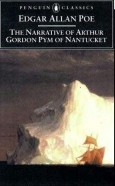 The opportunity to create the Shoggoth begins a long time before HPL was born in 1890. It starts with Lovecraft’s acknowledged master, Edgar Allan Poe. Poe wrote most of a novel back in 1838 called The Narrative of Arthur Gordon Pym. This story follows a young man who runs away to sea, only to suffer greatly when he is shipwrecked, stuck on a sinking ship, surrounded by killer sharks, forced to eat human flesh. Surviving that, Pym ends his journey in the frozen lands of the Antarctic. The book was never finished, but some critics have suggested Poe was going to propose the idea of an interior world with an opening at the Pole. The book ends instead on a mystery, giving us the mysterious word, “Tekeli-li!”
The book was published unfinished and would inspire another author, the French adventure writer, Jules Verne. This may seem an odd jump from the author of “The Fall of the House of Usher” to the man who penned Around the World in 80 Days, but this is largely due to associating both authors with one genre alone, which is a mistake. Poe wrote some early SF in tales like “The Unparalleled Adventure of Hans Pfaall” (1835) and “A Descent into the Maelstrom” (1841). It was this SF Poe that inspired Verne. (Verne wrote a horror novel called Carpathian Castle (1893), which was most likely inspired by Dracula, but it shows he wasn’t entirely stuck in a rut either.)
Verne, like many others, wanted to know where Pym ended up, so he wrote a sequel to Poe’s novel called The Antarctic Mystery or the Sphinx of the Ice Fields (1897). Verne uses characters from Poe’s book, along with as much research as possible in the Vernian fashion, to tell what became of the author. His novel involves shipwrecks and a magnetic, sphinx-like mountain. Any horror in Verne’s book is like that of Poe’s original, that of cannibalism and death through misadventure.
It would rest on the shoulders of H. P. Lovecraft to tell another version of the South Pole and the weird meaning of “Tekeli-li!“. “At the Mountains of Madness” (written in 1931) is not a direct sequel, as was Verne’s book. In the story, scientists go to a much more accurate South Pole (it is often forgotten how accurate the scientific details in HPL’s work can be and that he was published in SF Pulps as well as horror ones) and to Mount Erebus. There, the main characters find a long-vanished civilization that predates humankind. Slowly, the terrible facts become known, that strange space beings known as the Old Ones once ruled the world. These creatures bred servant races (one being human beings and the other being the liquid horrors known as shoggoths). To the scientists’ dismay, not all of these last creatures are extinct, with their weird cries of “Tekeli-li!“. The Antarctic setting will seem familiar to film fans from The Thing (Christian Nyby’s and John Carpenter’s version), which was based on John W. Campbell’s “Who Goes There?”, but borrows most of its mood from H. P. Lovecraft.
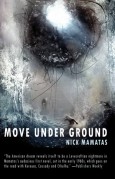 Though Lovecraft did not use his shoggoths front-and-center again (though he mentioned them twice more), they did proved to be popular with other authors. Henry Kuttner would use them for “The Salem Horror” (Weird Tales, 1938). More recently, Michael Shea re-invented them in “Fat Face” (1987), making them able to take on quasi-human form. Nick Mamatas features similar shoggoths in his Beat Generation/HPL crossover, Move Under Ground (2004). David Conyers and John Sunseri make them weapons of mass destruction in their Mythos/spy novel, The Spiraling Worm (2007).
The Mythos writer who wants to use the shoggoth in some new way can learn a lot from these later writers. Be careful to avoid anything that will invoke images of Steve McQueen running from a viscous tidal wave. King’s “The Raft” uses the bottleneck of the raft in a way that reminds us of sharks as well as childhood games. Shea makes his shoggoths more mobile and able to disguise themselves, for a vomit-smelling wave of squidgy goodness is a little hard to miss. In my own story, “There Was An Old Lady” (Dread #3, Spring 1998), I tried to think of a way evil folk could exploit the shoggoth for their own mysterious ends. What strange purpose can you put them to?